

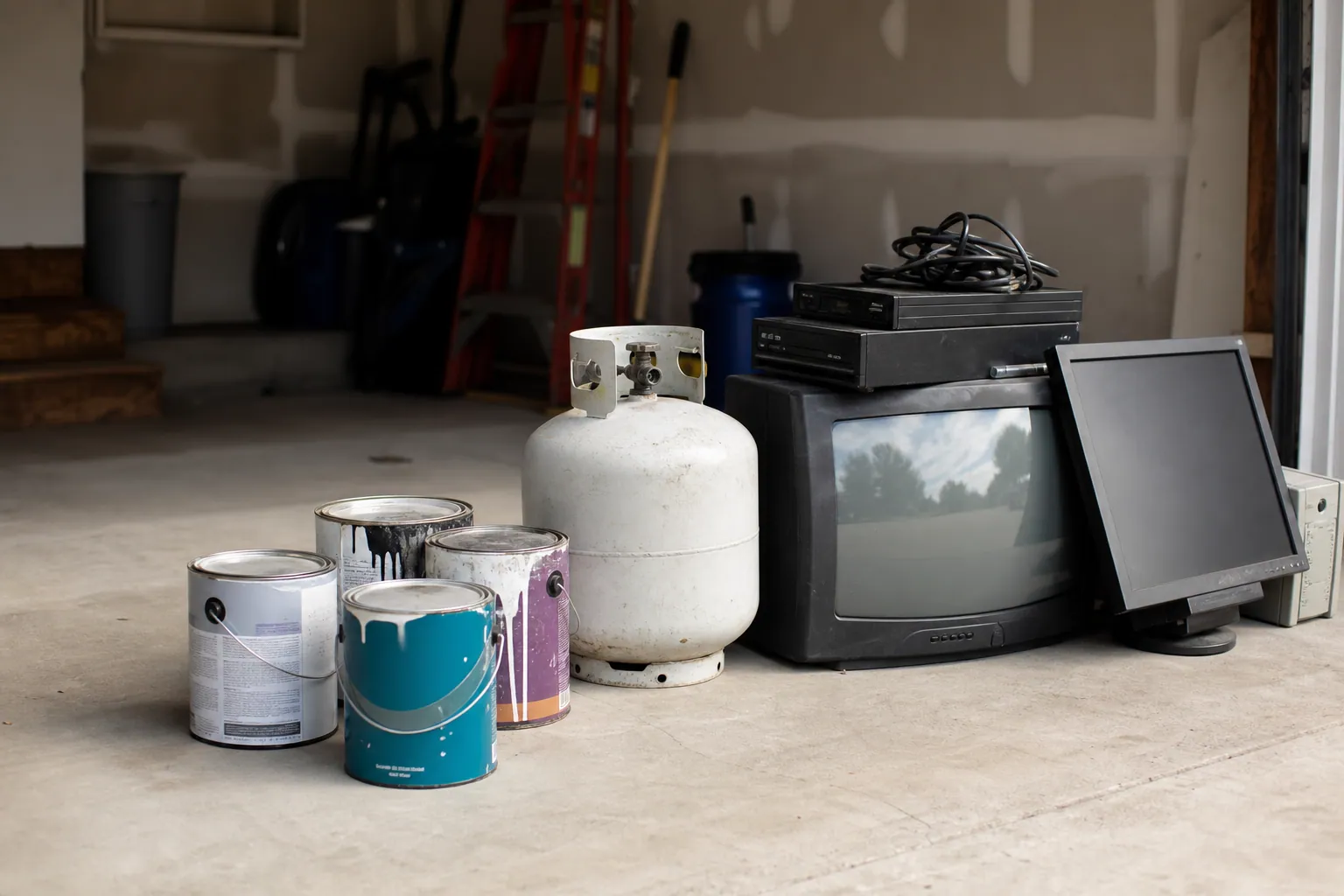
Every junk removal crew knows the same awkward moment: the truck is loaded, the garage is nearly empty, and then someone points at a shelf of half-used paint cans. The crew has to say no. That's not laziness — landfills, transfer stations, and DOT transport rules bar haulers from carrying most hazardous materials, and a company that takes them anyway is telling you something about how it operates.
The good news: every one of these items has a legitimate, usually cheap disposal route. Here are the ten things you should never expect a hauler to load, and exactly where each one goes instead.
Anything that can ignite inside a hot truck box is off the list, full stop. That covers the three most common rejections:
Pesticides, pool chlorine, drain cleaner, and used motor oil are classic HHW. Most counties run a permanent drop-off or quarterly collection events, free for residents — your county public works page lists dates and locations. Keep chemicals in their original containers and never combine them for the trip.
Asbestos is the one item where you should stop before touching anything. Popcorn ceilings, 9x9-inch floor tiles, and pipe wrap in pre-1980 homes are the usual suspects; lab testing runs $30–$120 per sample, and removal is a job for a licensed abatement contractor — typically $1,200–$3,000 for a small area in 2026. Once the abatement crew has sealed and removed the material, a licensed hauler like Acme Junk Removal can clear the rest of the room — the non-asbestos debris, old fixtures, and everything else around the work zone.
These four aren't dangerous to touch, but landfills refuse them and states regulate how they're processed — so most haulers either decline them outright or charge a documented recycling surcharge.
Needles, lancets, and auto-injectors can't ride in a junk truck for obvious reasons. Use an FDA-cleared sharps container (about $7 at any pharmacy) and check safeneedledisposal.org for free drop-off sites — many pharmacies, hospitals, and fire stations accept sealed containers. Mail-back kits run $25–$60 if nothing is nearby.
Old medications go to pharmacy take-back kiosks — most CVS and Walgreens locations have one — or the DEA's National Prescription Drug Take Back Day each April and October. Don't flush anything unless it appears on the FDA's short flush list.
Before you book a pickup, walk the space and sort into two piles: the restricted items above, and everything else. Handle the hazardous pile yourself with one HHW trip — it's usually free and takes an hour — and let the crew take the other 95 percent: furniture, appliances, yard waste, construction debris, general clutter.
A reputable company will tell you up front what it can't load and point you to the local disposal route, not shrug and leave you guessing. And if a hauler offers to 'just take' your gas cans and pesticides, that's your cue to find a different hauler — that load is headed somewhere it shouldn't be.