


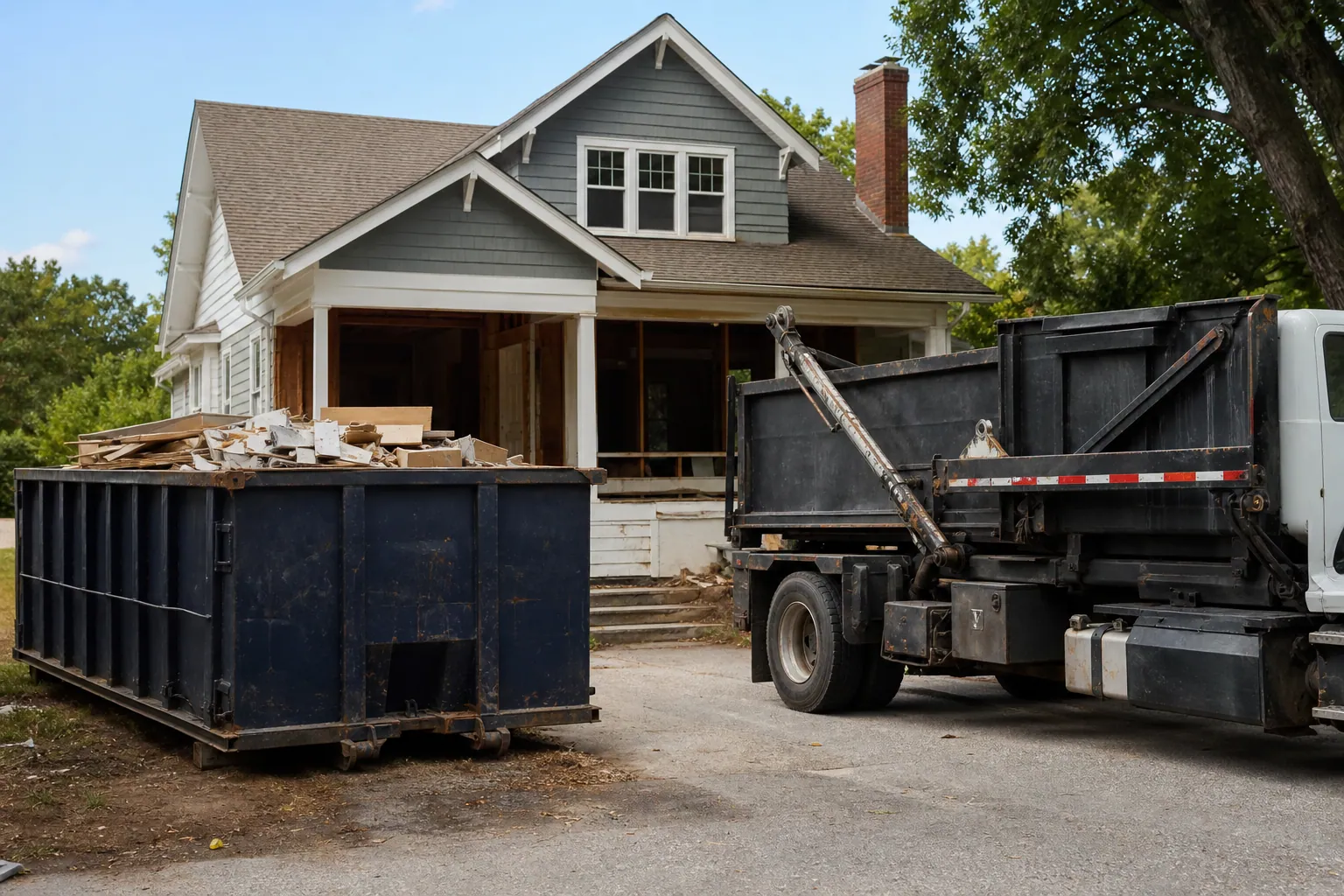
A 20-yard dumpster and a full-service junk crew can both make a renovation's worth of debris disappear. The sticker prices even look comparable — right up until you add permits, weight overages, and the fifteen hours you'll spend loading the container yourself.
So here's the actual 2026 math, broken down by project type. The short version: the cheaper option depends less on the price list and more on two things — how long your project runs, and who's doing the lifting.
Dumpster rental is priced by container size for a set period, usually seven days. In most US markets in 2026, a 10-yard container runs $290–$430 per week, a 20-yard — the renovation workhorse — runs $350–$550, and a 30-yard runs $450–$680. Those rates typically include delivery, pickup, and 2–4 tons of disposal weight, with dense metros at the high end.
Full-service junk removal is priced by how much of the truck you fill, with labor included. Expect a $100–$150 minimum for one item, $175–$275 for a quarter truckload, $300–$425 for a half, and $550–$700 for a full truck, which holds roughly as much as a 15-yard dumpster.
On paper, the dumpster wins per cubic yard, and for pure volume it usually does. But you're not comparing volume — you're comparing volume plus labor plus fees, and that's where the numbers start to move.
A dumpster quote is a starting price, not an out-the-door price. Before you sign, ask about all of these:
Then there's your driveway. A loaded 20-yard dumpster can weigh 6–10 tons — enough to crack aging concrete or dent asphalt on a hot day. Put plywood under the rails: rental contracts almost universally put surface damage on you, and protective boards, if offered at all, run $20–$50.
A dumpster comes with zero labor — every pound of debris gets in there because you carried it. A two-person garage or basement cleanout routinely eats 8–15 hours, and the materials are heavier than they look: a five-gallon bucket of broken tile weighs 60–70 pounds. Renovation debris is worse, because drywall and plaster come off the wall light and land in the container heavy.
A full-service crew handles that same job in one visit — two workers, the truck, disposal fees, and the sweep-up are all in the quote. Most residential pickups take 20–40 minutes onsite. That labor is what you're paying for, and for most people it's the whole decision.
For the genuinely hard parts — cast-iron tubs, sleeper sofas above the first floor, anything involving stairs — let a licensed, insured pro like Acme Junk Removal take it. One strained back or gouged stair tread wipes out everything you saved.
Here's how it usually shakes out once fees and labor are counted:
The dumpster wins on raw dollars when the project runs long, you have willing labor, and there's a legal, damage-proof place to park it. Full service wins when the job is short, the items are heavy, or the total volume is under about half a truckload.
There's also a quieter difference: good hauling crews donate and recycle what they can, while everything in a dumpster goes to the landfill.
Either way, get both quotes — they're free. Ask for the total out-the-door number with weight, permit, and pickup included, then be honest about what your own Saturday is actually worth.