

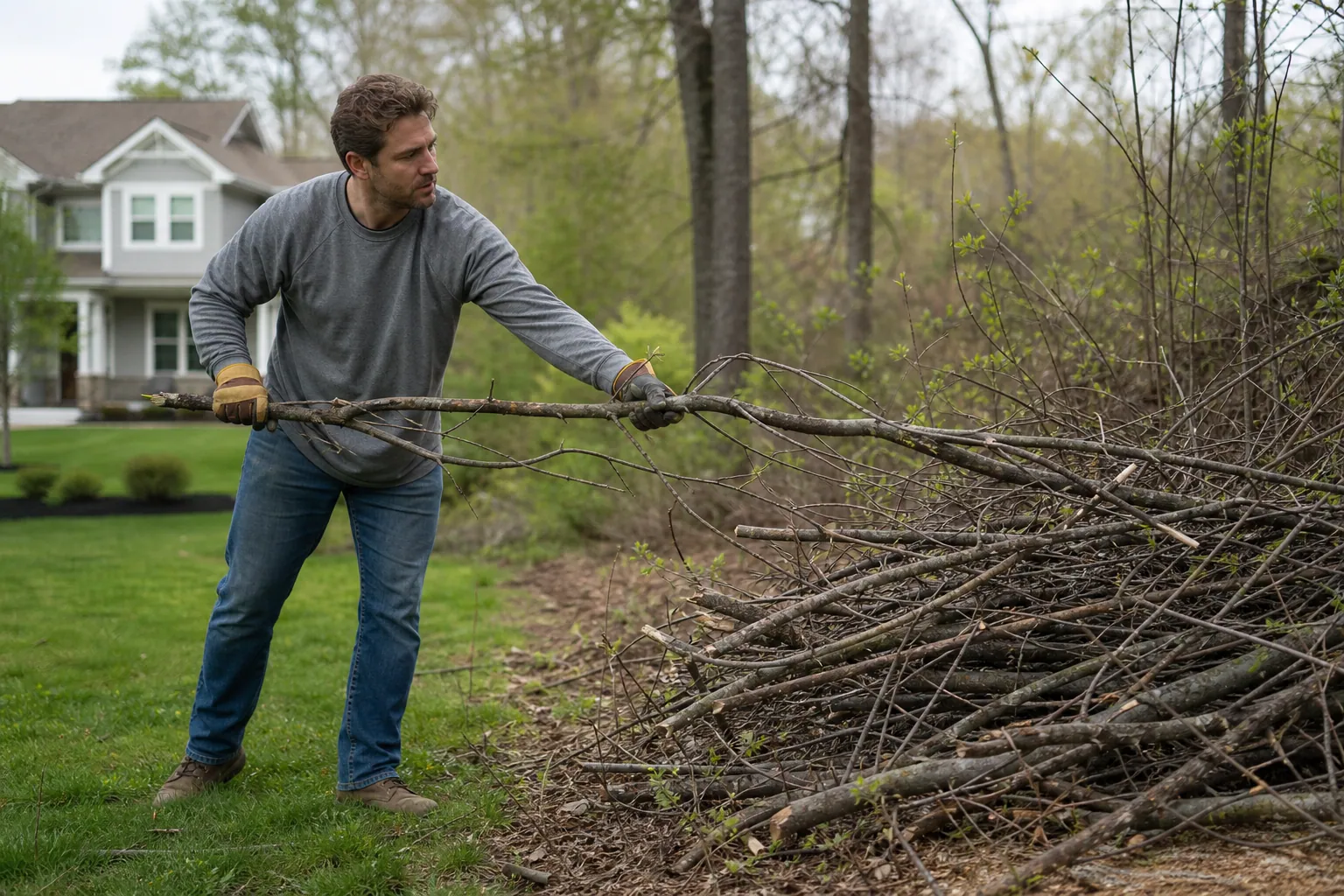
Every yard comes out of winter with a to-do list: snapped branches, matted leaves, the brush pile you swore you'd deal with in November, and whatever the last windstorm added. None of it is complicated to remove — but doing it in the wrong order, or hauling things your city would have picked up free, wastes a weekend and real money.
Here's the practical version: what curbside programs actually accept, when burning is legal (usually it isn't), how to stage brush so it costs almost nothing to get rid of, and the honest math on dump runs versus hiring a crew.
Not everything in the pile is the same waste stream, and mixing streams is the most expensive mistake in yard cleanup. A load of clean brush is cheap to dispose of almost everywhere; that same load with a fence panel and a bag of shingles mixed in becomes "mixed debris" and gets priced like garbage.
Split things into three piles as you work:
Most US cities and haulers run seasonal yard waste collection from roughly March through November, either weekly alongside trash or as scheduled bulk pickups. The details vary by town, but the pattern is remarkably consistent.
Ten minutes on your hauler's website or one call to public works settles your local specifics. It's the highest-value ten minutes of the whole project.
If you're inside city limits or in most suburbs, open burning of yard waste is flatly prohibited, full stop. Rural areas typically allow it only with a permit, only in certain months, and never during a burn ban — which in much of the country now covers a good chunk of spring.
Fines commonly run $250-$500 for a first offense, and you're liable for anything the fire touches. With chipping, curbside pickup, and cheap hauling available, burning saves little and risks a lot. If you're rural and legal, check your county's burn-ban status the morning of, not the week before.
Whether it's the city, a chipper service, or a hauling crew, everyone prices yard debris partly on how long it takes to load. A well-staged pile can genuinely cut the cost by a third.
A standard pickup bed holds about 2 cubic yards of loose brush. In 2026, most transfer stations charge a $30-$60 minimum per load for yard waste, and a storm-hit quarter-acre yard easily generates 6-10 cubic yards — so you're looking at three to five trips, $100 or more in fees and fuel, and a full Saturday. Renting a truck adds another $30-$50 a day plus mileage.
A junk removal crew charges roughly $150-$250 for a quarter truckload of yard debris and $400-$600 for a full 12-15 cubic yard load — loaded, swept, and gone in about an hour. For a pile or two, DIY wins. For a whole yard's worth, or anything involving leaning limbs, half-fallen fencing, or debris tangled near utility lines, that's the point where a licensed, insured crew like Acme Junk Removal is the safer and often cheaper call once you count your own hours.
Spring slots fill fast for both municipal bulk pickup and private haulers, so the earlier in the season you book, the better the pricing and the shorter the wait. The yard won't clean itself, but it doesn't have to eat two weekends either.